Last updated:
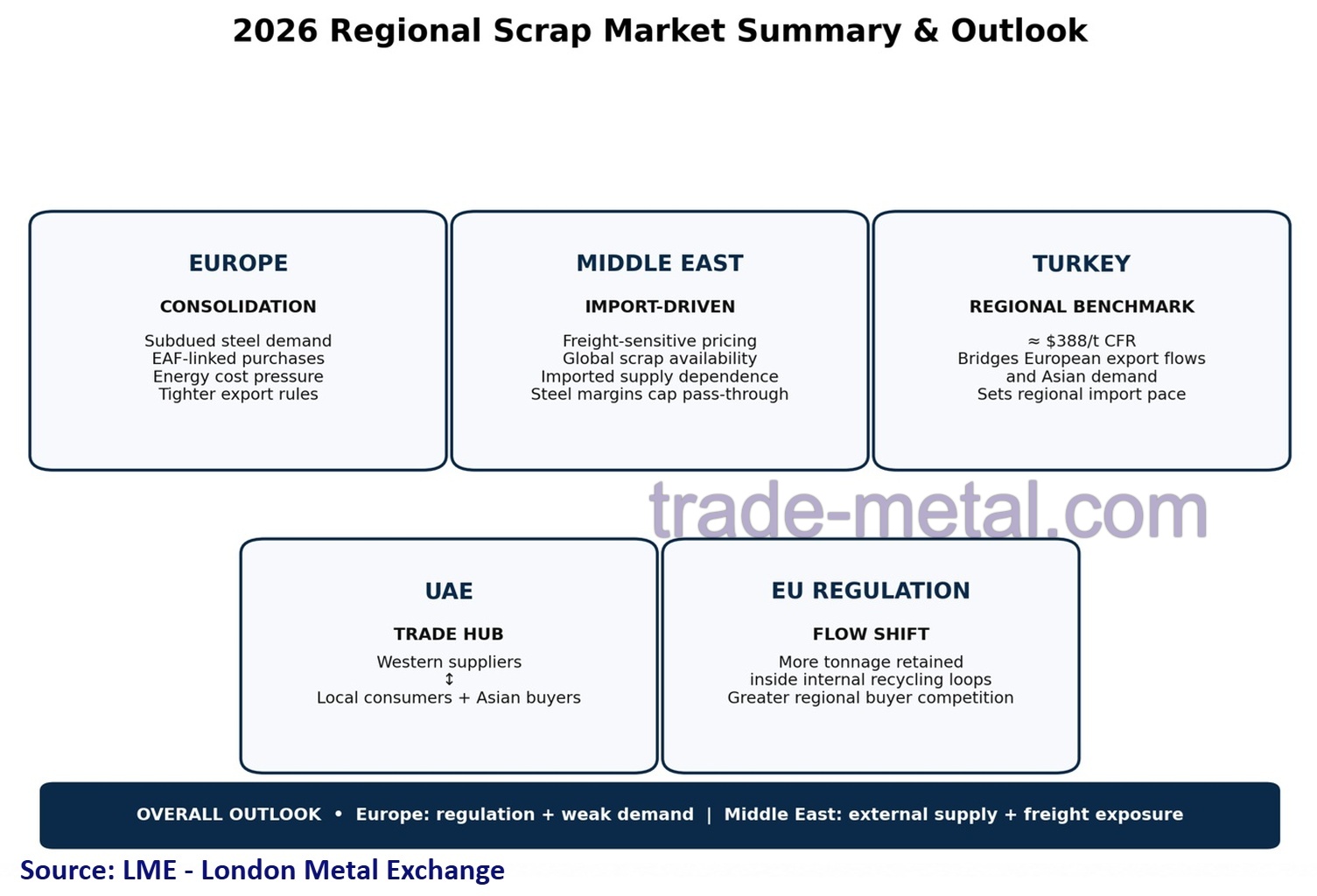
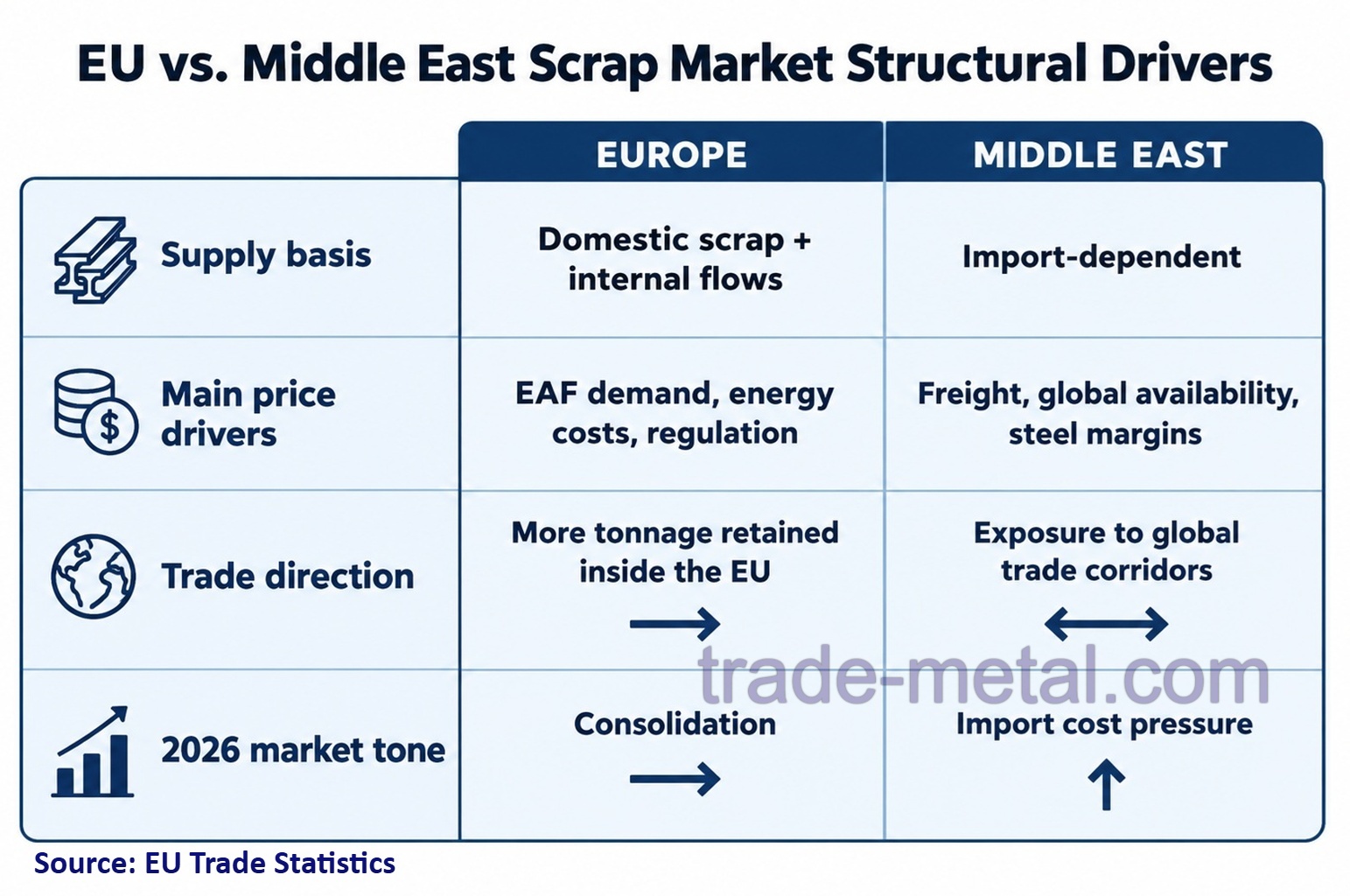
European and Middle Eastern ferrous scrap markets started 2026 under starkly contrasting operational conditions. While trade corridors, ocean freight costs, and global scrap arbitrage bind the two regions together, local pricing reflects immediate regional steel output, logistics overheads, and regulatory barriers rather than general macroeconomic cycles.
In Europe, mill scrap purchases track domestic electric arc furnace (EAF) operating rates directly. According to EUROFER’s Q4 2025 Economic and Steel Market Outlook, EU steel consumption stays well below historical baselines. Sluggish activity in residential construction and industrial manufacturing continues to cap scrap volume recovery.
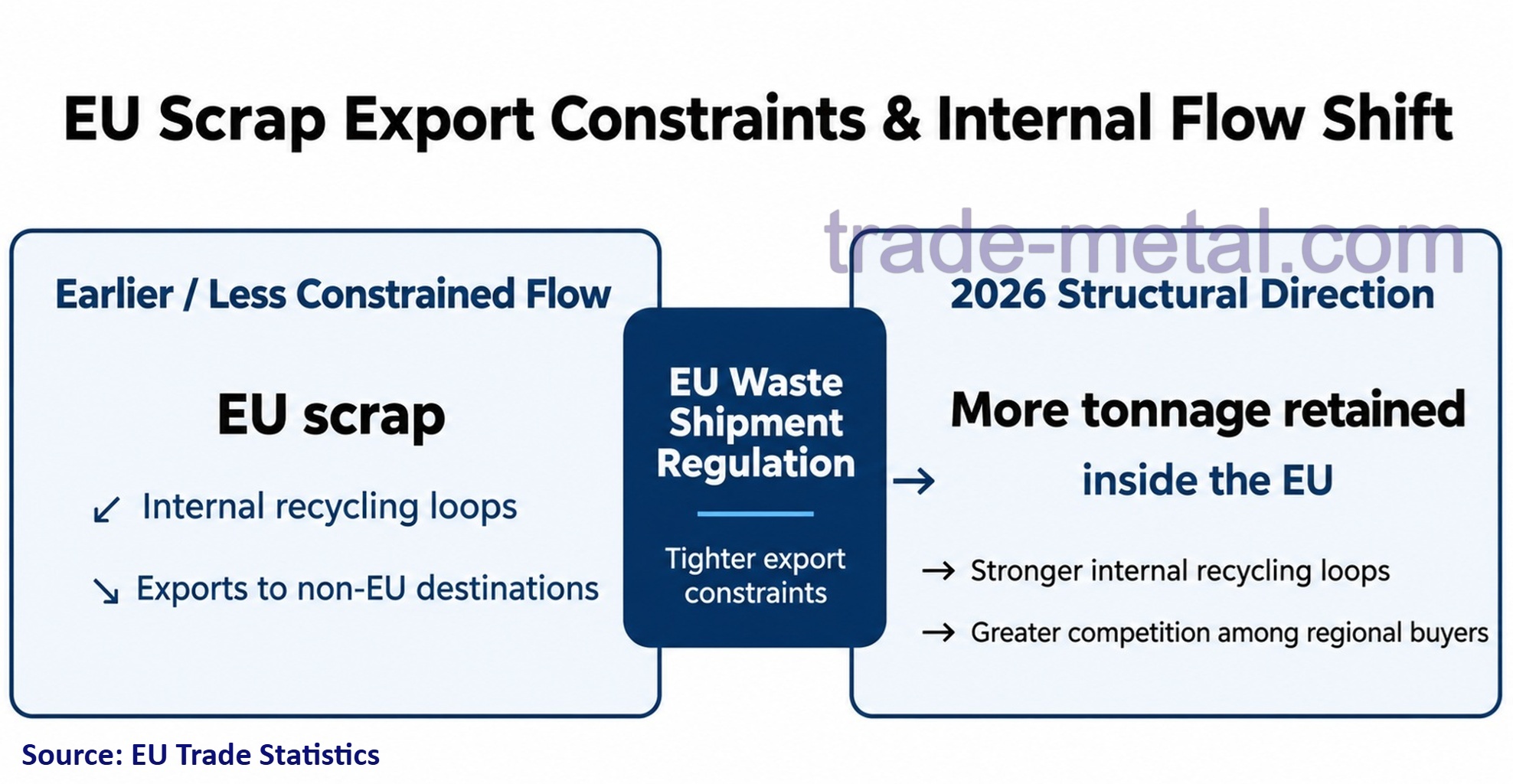
Concurrently, European regulatory policy acts as a primary market constraint. The updated EU Waste Shipment Regulation https://eur-lex.europa.eu/eli/reg/2024/1157/oj alongside circular economy rules gradually curb scrap exports to non-OECD countries. This keeps more tonnage within the bloc, bolstering internal raw material coverage while intensifying price competition among regional buyers.
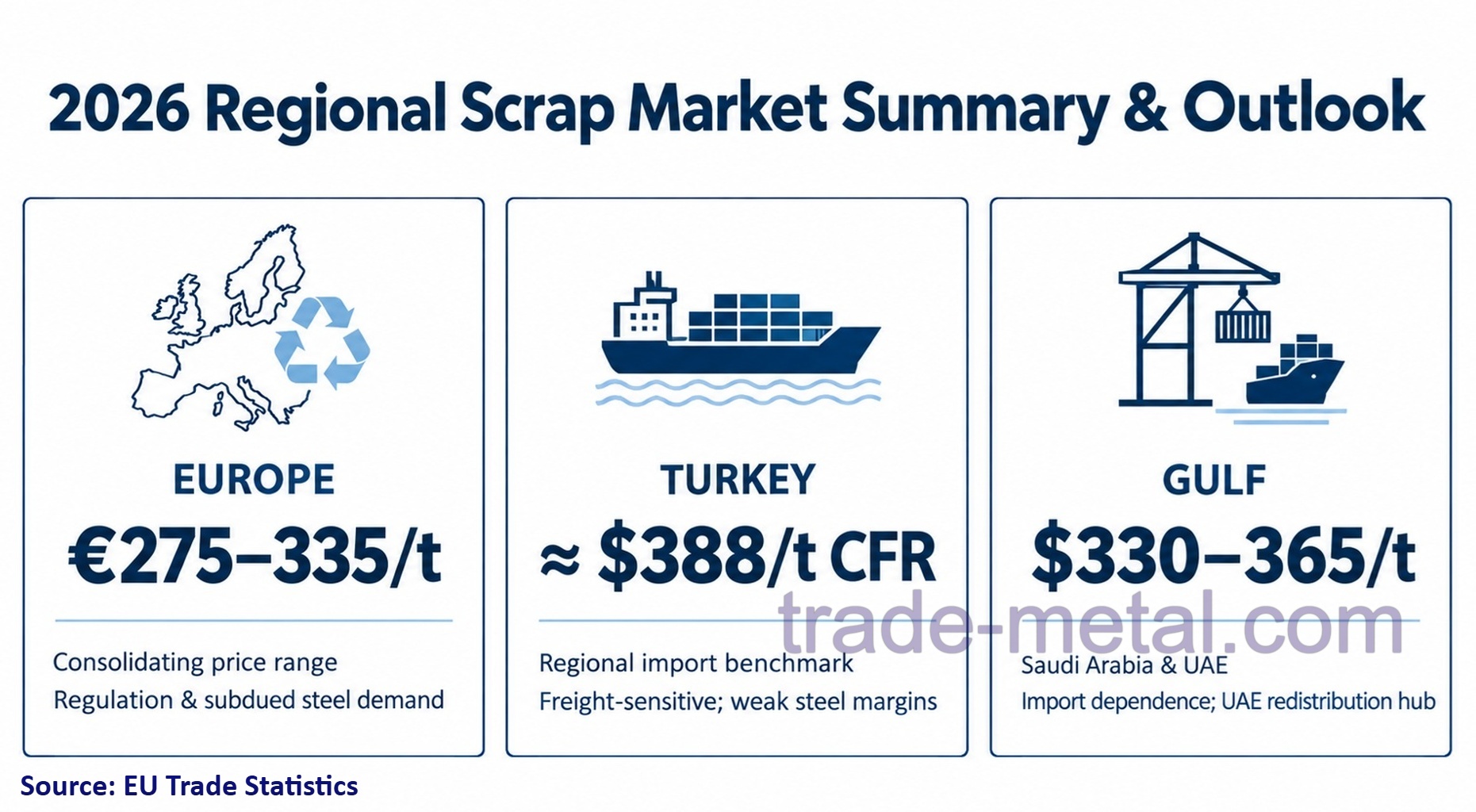
By contrast, Middle Eastern buyers remain structurally dependent on imported scrap. Pricing across the region reacts quickly to freight volatility, global scrap availability, and spot steel margins. Turkey maintains its role as the central pricing benchmark, bridging European export flows with Asian demand and setting the pace for regional import values.
European scrap markets entered a consolidation phase after early-year price fluctuations. German domestic prices settled near 300 EUR per ton ex-works as winter supply bottlenecks dissolved. Italian market levels hold slightly higher within 285 to 325 EUR per ton, backed by steady EAF steelmaking requirements.
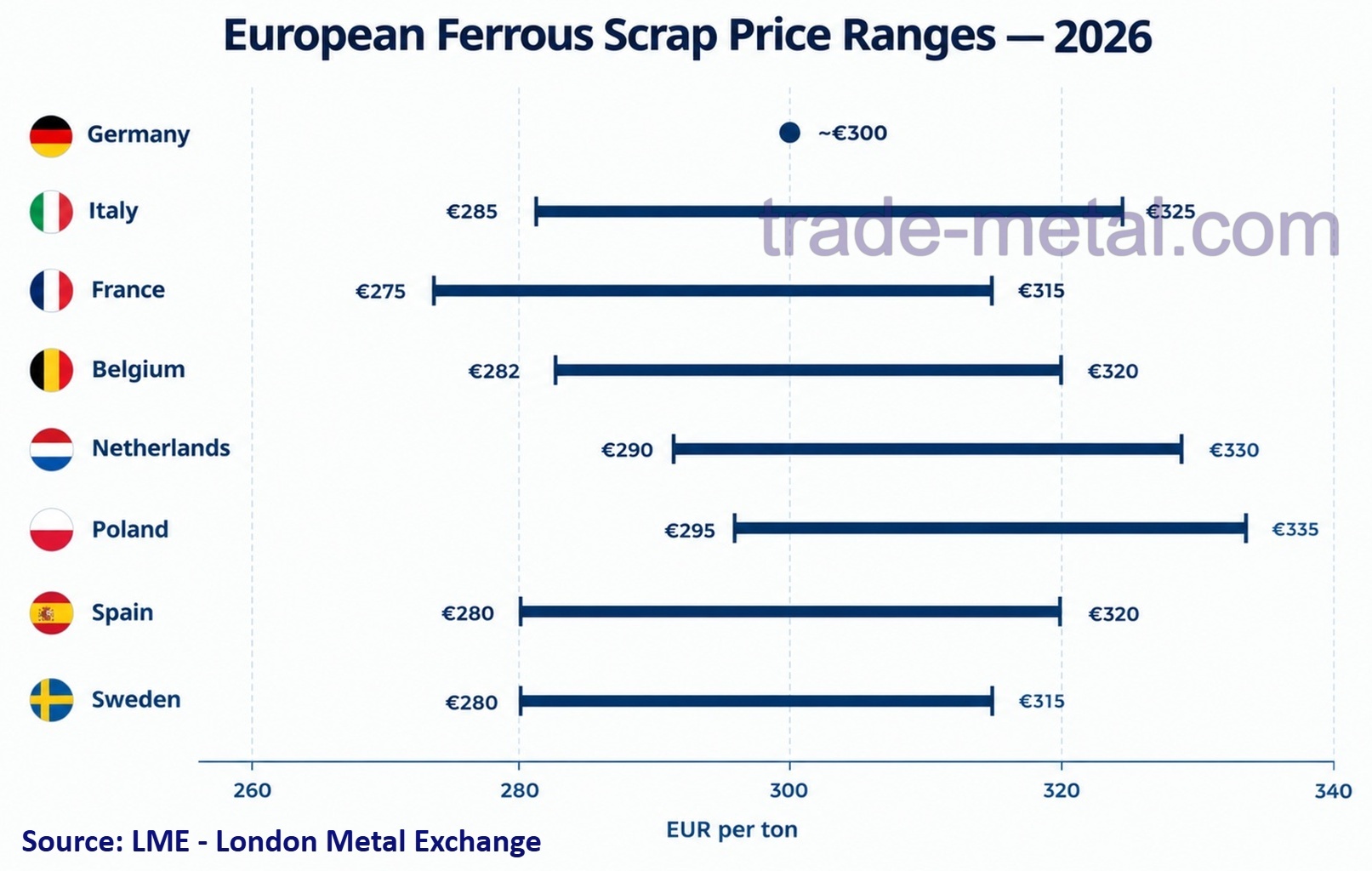
Supply across Europe has normalized following winter disruptions. Steel mills maintain strict hand-to-mouth procurement strategies rather than rebuilding inventories, constrained by elevated energy tariffs and uncertain order books.
Tightened export rules under the revised EU Waste Shipment Regulation continue to alter structural flows, channeling larger volumes back into internal recycling loops.
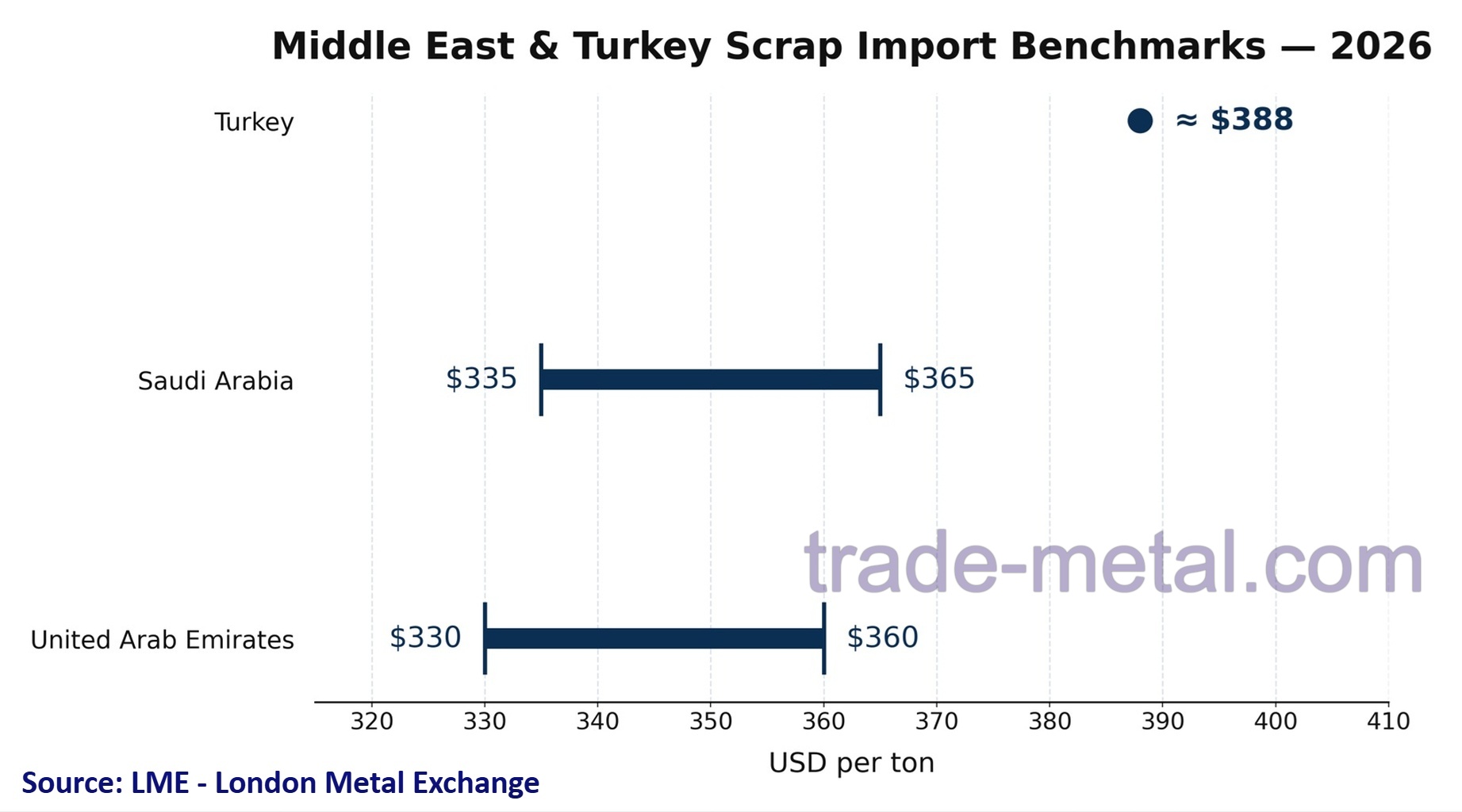
By the evaluation of the World Steel Association, the Middle East remains exposed to international supply shocks and freight movements. Imported scrap values in Turkey reached approximately 388 USD per ton CFR, driven up by tight availability from primary exporters and high shipping charges.
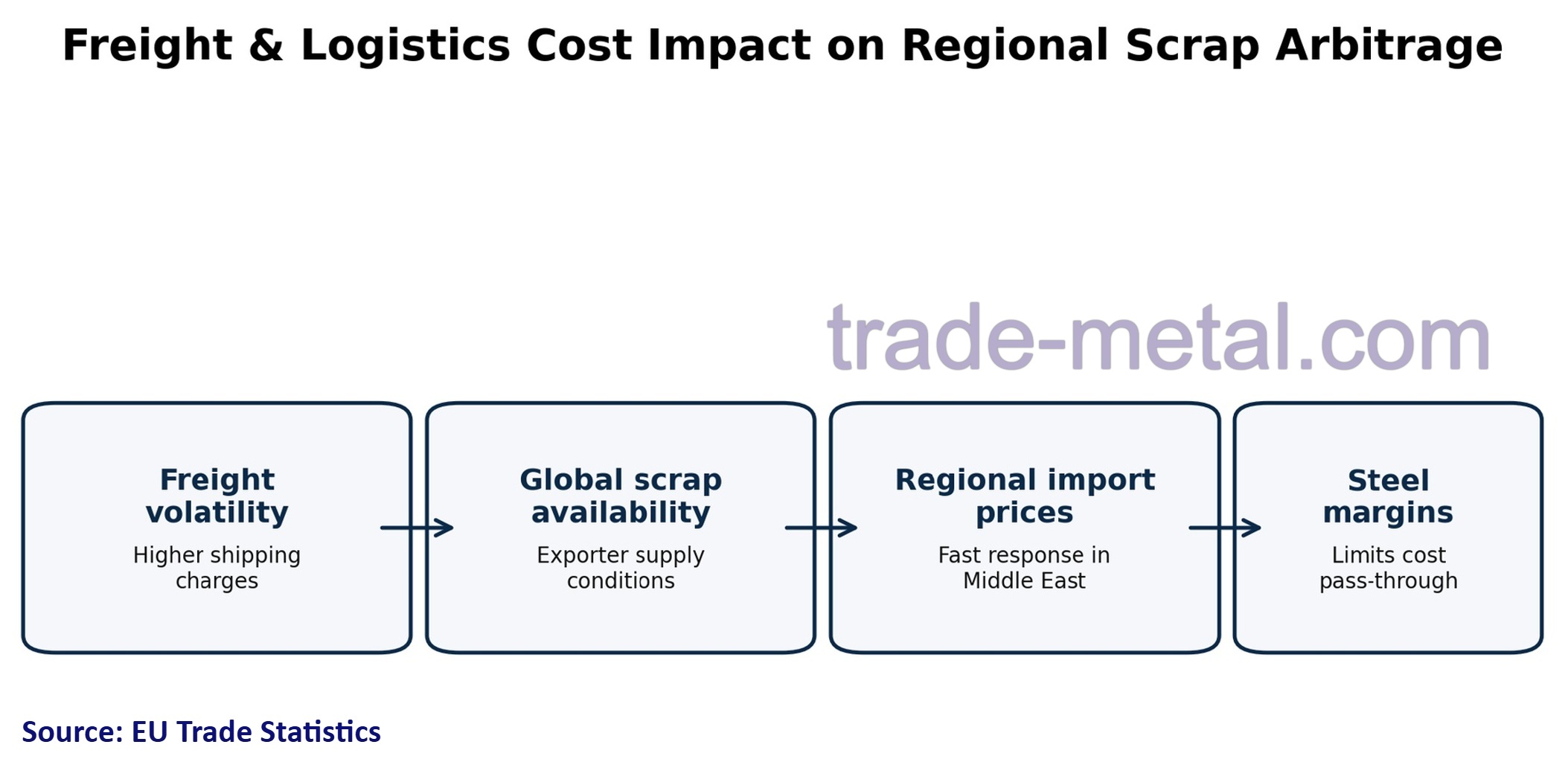
However, depressed downstream demand for finished steel, particularly long products and rebar, prevents Turkish mills from passing higher raw material costs down the chain.
Regional Middle Eastern import levels:
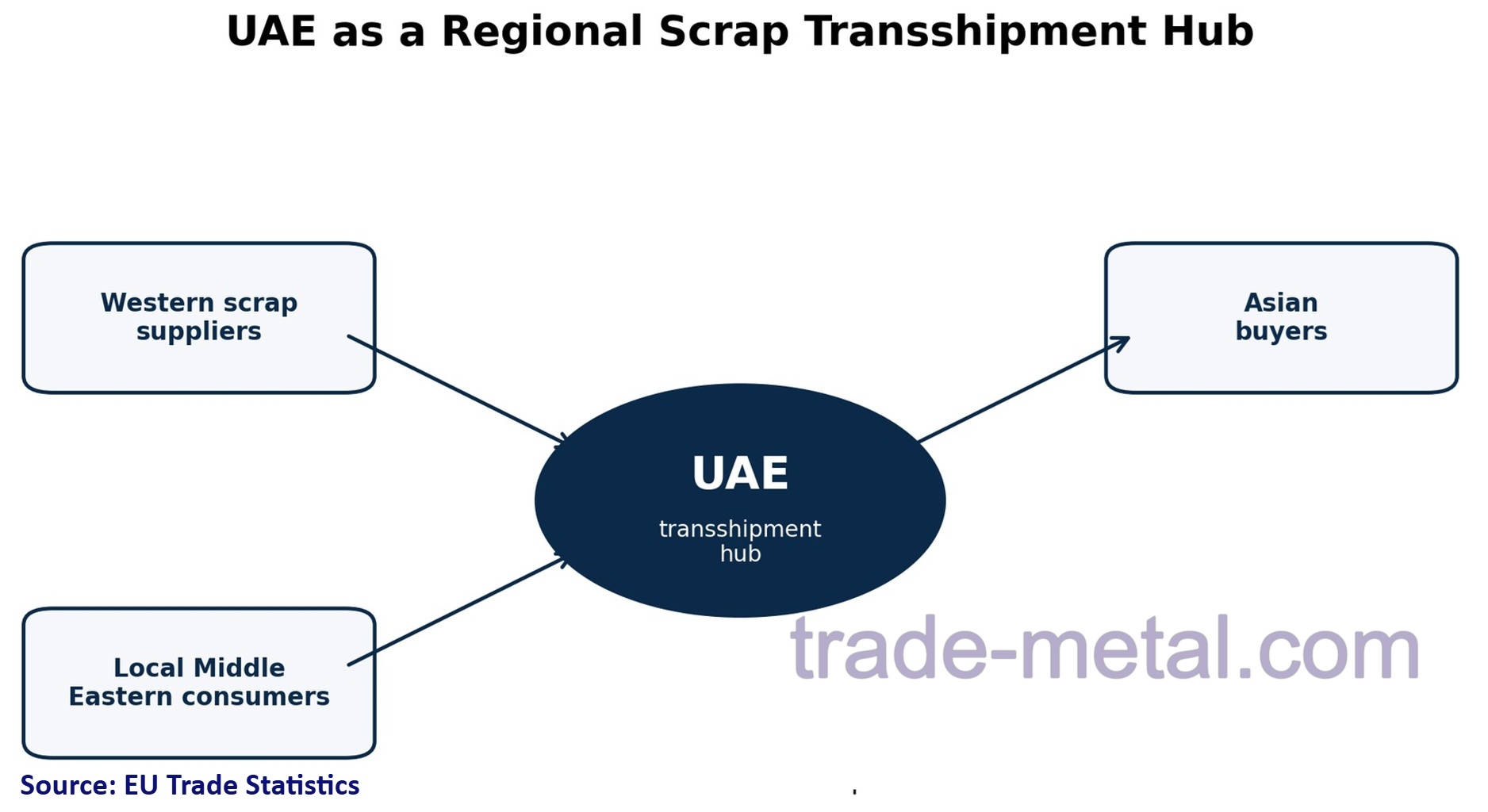
The UAE reinforces its position as a transshipment hub, balancing trade corridors between Western scrap suppliers, local consumers, and Asian buyers.
European scrap markets in 2026 remain bounded by internal regulation, energy costs, and subdued domestic steel making. After clearing winter volatility, the European trade operates in a lateral range with minimal room for upward movement unless end-use steel demand shifts.
Export constraints reinforce Europe’s transition toward a closed-loop recycling ecosystem. Meanwhile, Middle Eastern scrap pricing continues to run on external supply availability and freight fluctuations. While Turkey serves as the regional benchmark, low steelmaking margins keep a firm ceiling on import prices, leaving Gulf markets dependent on global trade corridors and the UAE’s redistribution logistics.